Situation
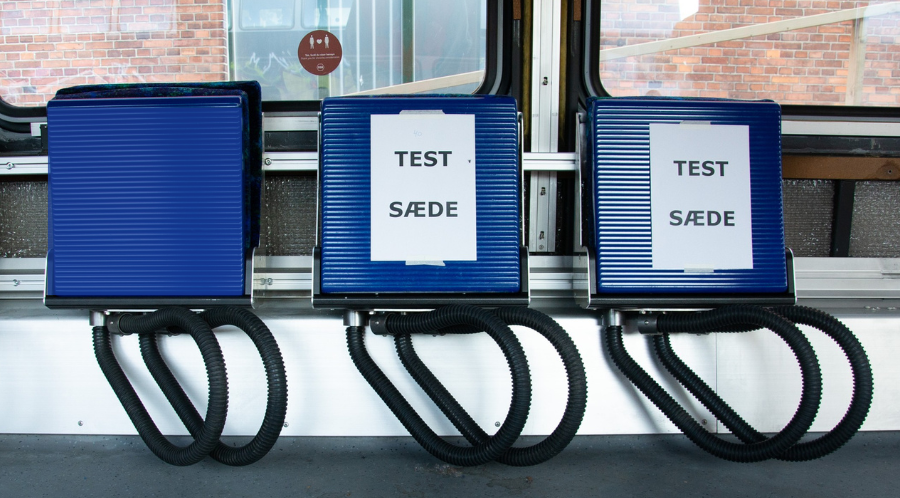
DSB experienced rising demand for bicycle spaces on regional trains and wanted to offer a new type of bicycle carriage that combined safety, ease of use and simple boarding and alighting. To base the choice on user insights and behavioural design principles, DSB wanted to carry out a realistic test set-up in the very train carriages that would ultimately accommodate passengers travelling with bicycles. The task was therefore to test a range of different prototypes in order to select the components that would, going forward, ensure that all passengers have as smooth and intuitive a journey as possible in the bicycle carriage, while still meeting strict safety requirements.
Complication
To ensure that the test results from the bicycle carriage were as accurate as possible, Epinion created a realistic test set-up based on peak-load scenarios and involving real passengers with different types of bicycles. Four key parameters were particularly important to monitor: smooth passenger flow, high usability, bicycle parking without risk of damage, and optimal bicycle capacity. For the validity of the test, it was crucial that participants were thoroughly recruited, both to ensure demographic diversity and the inclusion of different mobility needs, and that they took part in the test according to a carefully calculated task-rotation principle. During the prototype testing itself, Epinion had a particular focus on mapping participants’ non-verbal behaviour, including through observations and detailed video recordings of interactions with bicycle racks and other fittings.
Recommendation
Following an analysis of the prototype test, Epinion was able, based on observations and behavioural insights, to support DSB in identifying and recommending which prototype best met the four key selection criteria. The advice also included behaviour-based recommendations for further development of the carriage design, with a focus on even broader accessibility and efficient passenger flow during peak periods for Coast Line passengers.